| One Saturday morning when I was 9 years old, I sat on the aqua colored carpet in our den eating cereal, watching Teenage Mutant Ninja Turtles with my two younger brothers. The real Ninja Turtles, not the new crap…. We’re talking the old school cartoon where Splinter wasn’t so scary and every plot was comfortingly similar. We were seldomly allowed to watch TV, let alone also have cereal with it. But Saturday morning cartoons were sometimes the exception. Earlier that week, my maternal grandfather (who my son is now named after) passed away. As a result, my mother wanted to become more religious. He had a stroke – it was sudden and unexpected. He was only 69 years old. My mother rushed to the hospital and caught him on his very last breath. She witnessed death. 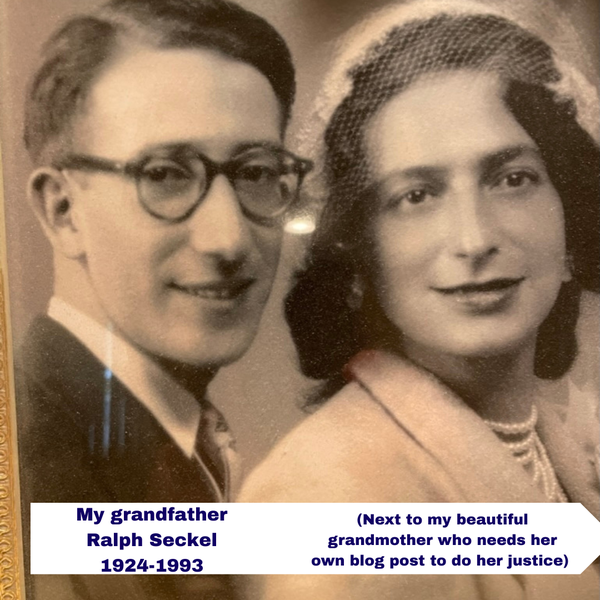 Something shifted inside of her and she had what some might call a spiritual experience. This is not rare. Birth and death are the closest we get to God. Witnessing it makes many people want to get closer to God as well. As a result of her experience, she marched into the den on that Saturday morning, turned off the TV, announced “we’re keeping Shabbat,” and left the room. My brothers and I looked at each other, milk dribbling out of our mouths. Huh? What just happened? (I recently fact-checked this memory with my mom and it’s possible it wasn’t as dramatic as I remembered but hey, it’s my blog 😉) And so, our family became what the Jewish world calls “modern orthodox.” This means that you keep the Jewish laws but you live a modern life. You don’t dress and act like the stereotypical “black hatters” but you still maintain an observant lifestyle. To be honest, I never really kept Shabbat fully as a kid. There were just too many rules. You can’t turn the light on/off, can’t cook, drive, use money, write, or engage in anything that requires using electricity. Boooorriiiinnngggg. But it did mean that we were part of a community. A community who also stopped the hustle and bustle of life once a week to pray, eat, socialize, and have intentional, quality time with family. 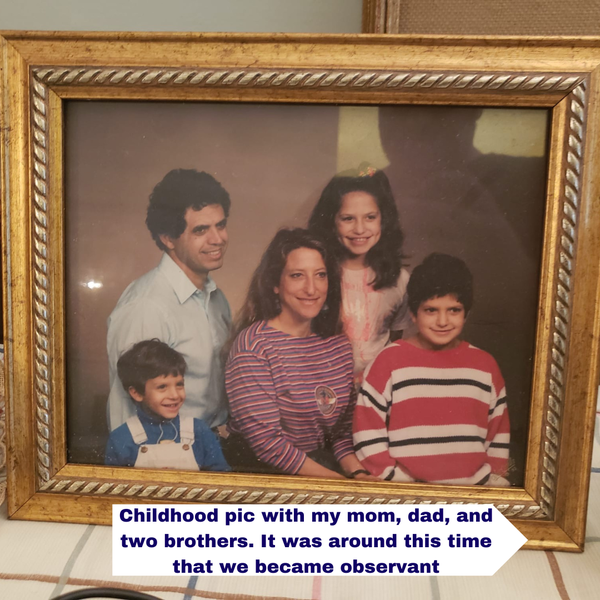 I have many childhood memories of spending Shabbat playing board games with my brothers, taking long walks, and hanging with friends. There are worse things. But I only observed because my family did – so once I was out on my own I pretty much stopped. For most of my adult life, I even worked on Shabbat – which is the biggest no-no around. When I became a single mother, I started putting more thought into how I wanted my son to grow up. I thought of my own childhood and how special Shabbat really was – even if I felt inconvenienced by it. I knew it was good for kids. At this point, I was about three years sober and I was starting to feel a yearning to get deeper in my Judaism again. I had been through a lot and I was ready to start reconnecting to my roots. So I summoned all my courage and marched up to my manager at the restaurant where I was working nights and weekends and told him that I was no longer available for Friday night or Saturday shifts. He looked at me blankly. This is like telling your office job that you’re not available Monday-Friday. Weekends were his bread and butter. “Ugh ok I mean if it’s a religious thing I guess I can not put you on EVERY weekend.” After I reiterated that I would not be able to work ANY Friday or Saturday, he responded by saying “you mean unless there’s an emergency, right?” In my head, I thought “what’s a waitressing emergency?” But I just nodded politely because I didn’t want to lose my job and I could see him starting to foam at the mouth. 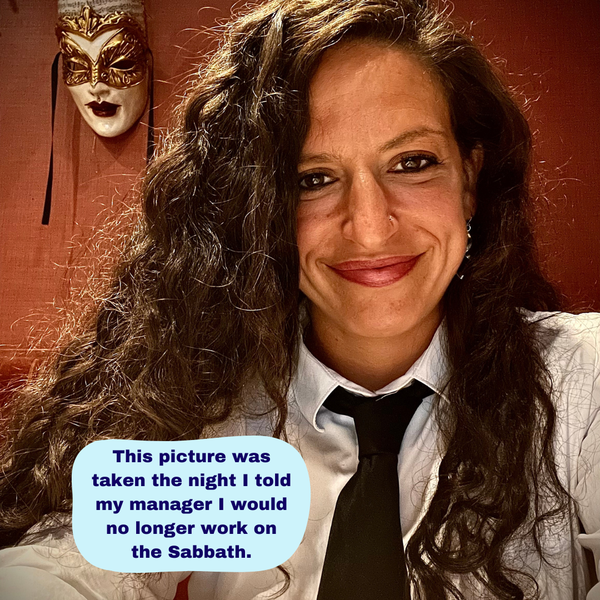 They say that if you stop working on Shabbat, God actually brings more money into your life. There are countless stories of store owners who refuse to work on Shabbat, only to double their revenue during the week. As for me, it wasn’t long after I stopped working on Shabbat that my career as a life coach started to take off. Is it odd or is it God? The one holiday that I always observed strictly was Yom Kippur. Even when I was in active addiction, I fasted and went to synagogue on Yom Kippur. In my lowest of lows, it was my non-negotiable holiday. On Yom Kippur of 2023, I fasted and prayed and repented, as usual. But something was different about this Yom Kippur. Spending the day without electronics or distractions from God and spiritual literature felt especially enlightening. I sat on my porch almost all day and read the Tehillim (Psalms) and talked to God. I did breath work and reflected. By the end of the day, I felt so peaceful and uplifted. So connected to myself and to my Higher Power. So content. I thought to myself, “I could do this every single week.” And it was in that moment that I decided that I was going to keep Shabbat again. I didn’t decide exactly when but I knew it was coming. Ten days later was October 7th. The war started, I was changed forever, and my path back to being an observant Jew was intensified and strengthened. That’s the interesting thing about this war. It has brought so many non-observant Jews to observance. Disconnected Jews to connection. Opposing political sides bonded over the generational trauma that was once again triggered in the most baffling way. We became one again. Many Jews made Aliyah. And many Israelis fled to other countries. Thousands were displaced within their own land. There is no such thing as a Jew who wasn’t changed by October 7th. We even have a term for it – “the October 8th Jew.” All I can say is thank God my child was too young to understand what was going on and I didn’t have to explain to him that the world wants us dead simply for being Jewish. Again. Fast forward to a few weeks before the big move. I’ve decided that we will start observing Shabbat immediately upon our arrival to Israel. I’ve created accountability by telling my brother, who we were moving down the street from. I also started talking to Rafi about it. As a five year old, Rafi responded well to the change coinciding with the big move. I explained to him that in Israel, we keep Shabbat because we are moving there to be closer to our Judaism and Shabbat is a big part of being Jewish. Rafi was no stranger to Shabbat. Both my brothers observed and we always respected that when in their homes. He also attended synagogue with my step-dad every Shabbat since he was two years old. He knew it was a special day. I talked about it with excitement and awe – and so that’s how he internalized it. Sometimes I think about the power I have as a parent – especially to a young child. However I portray a situation or event is how he will internalize it. But it has to be authentic. Kids see right through our bullshit. I feel this the most when it comes to Rafi’s dad, who has not seen him since he was 15 months old. Because I have chosen not to speak about his father in any derogatory or dramatic way, Rafi has no ill feelings towards his father. But that almost didn’t happen. When my husband went back into addiction and I ended the marriage, I freaked out at the thought of my son not having a father. I didn’t know how I would talk to Rafi about it. So I just didn’t. I avoided the whole topic and just pretended as if he didn’t exist. 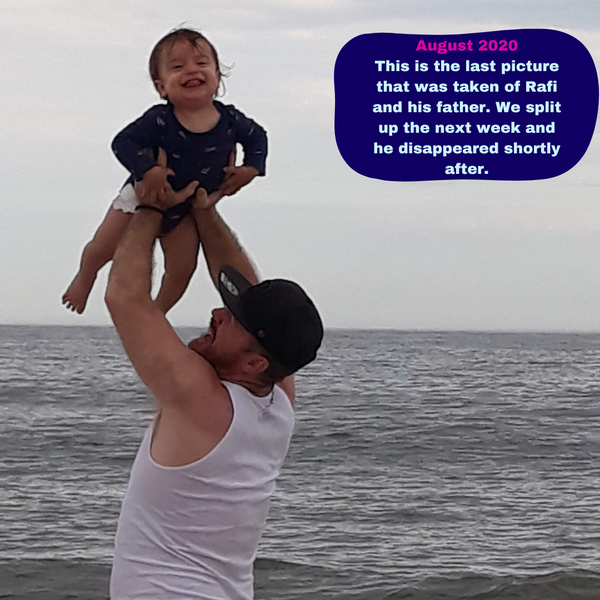 But then I had a transformational conversation with my friend, Rebecca. Rafi was 2 at the time and I remember sitting in my car outside my brother’s house telling her over the phone that I just didn’t talk about his dad with him because I didn’t know how to go about it. Granted, Rafi was barely even talking at this time but I knew it was inevitable. But then she said something that changed my life. You see, Rebecca WAS Rafi when she was growing up. She didn’t have her dad around either. “You know, it wasn’t even my dad being gone that was so traumatizing for me. I knew deep down he loved me. The hardest part was that no one was talking to me about it. So I felt like I wasn’t supposed to love him or something. I felt guilty that I did love him so I pretended that I didn’t. I couldn’t really talk to anyone about it so I just started stuffing all my feelings down. That’s really the part that fucked me up.” Well, damn. I went home that day and hung up a picture of Rafi and his dad in his bedroom. I started mentioning him neutrally in conversations. I remember being at the supermarket with Rafi and nonchalantly pointing out his dad’s favorite snack – party mix. As Rafi got older, I continued to bring up his dad whenever it made sense to. Without drama, without connotation. It was more just neutral information. I told him all the ways they were alike and how he got his incredible memory from his dad. Seriously, that man could retain paragraphs of information and spit it back out verbatim. I showed him pictures of our wedding and told him that he was actually in my belly at the time – even though we didn’t know it yet. The goal was to make it a normal topic – so that he felt comfortable bringing up his dad if he wanted to. And it worked. When he was 4, he started to ask questions. Sometimes I handled them like a pro and other times I second-guessed myself. But the point was he felt comfortable asking. I never lie to Rafi about his dad. I keep my verbiage age-appropriate but I don’t lie. This kid has to be able to trust me if I’m going to be able to help him through it. He is only 6 and there is much ahead of us on the journey – I have no idea how he will internalize his dads absence as an adolescent or a teenager. But so far, he thinks his dad is a pretty cool dude who loves us both but got sick and had to go away. Which is true. A few months ago, Rafi asked to call his dad. This was the first time he had ever made that request. I responded by asking, “what would you want to say to him?” With all the love and innocence in the world he replied, “I would just tell him I hope he feels better. I just know that talking to me would make him really happy.” Hell yeah. This kid’s self worth was not being affected so far and he definitely doesn’t feel unwanted. So yes, I am extremely aware of how much power and responsibility I have in the way that I talk about things. —————– We arrived in Israel on a Monday and I continued to talk about Shabbat as a source of excitement. We spent our first Shabbat meal in Israel at my brother’s house which only added to the fun. Rafi took pretty well to the change. No screen time, no electronic toys, and no driving. I bought him a scooter which was how all the kids get around town on Shabbat. We spent meals with family and then eventually with new friends. Sometimes we spent them just the two of us. 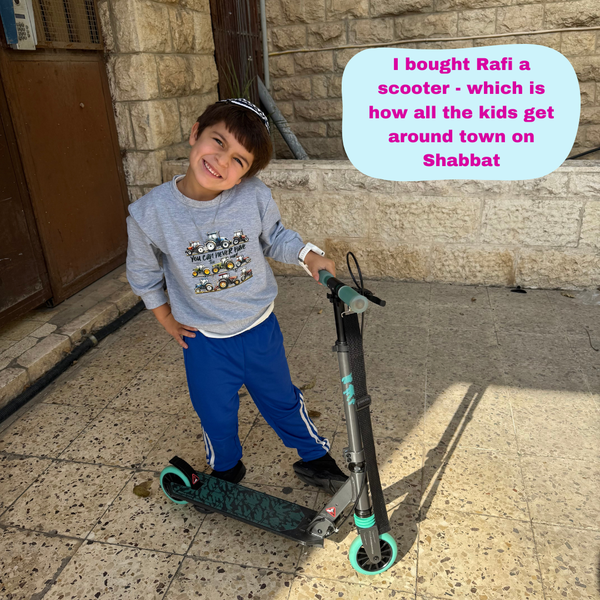 We went to synagogue and Rafi slowly started to make friends. I set up playdates, lunch dates, and park dates. We love Shabbat. It doesn’t hurt that you’re supposed to treat and pamper yourself on Shabbat. Which to a 6 year old of course means candy. Way too much candy. He’s ok with it. ———— I started observing Shabbat for Rafi. But I think I get more out of it then he does. Putting down all work, phones, screens, and anything else that makes light & sounds is so soothing. If we didn’t keep Shabbat, life would just keep going and never stop. No matter how much business I am getting, I don’t tend to it on Shabbat. Emails and texts can wait. Clients can wait. Phone calls can wait. Life slows down. We play, read, pray, walk, eat, and socialize. We feel our bodies, reflect on the week, and express gratitude for the little things. Shabbat also creates meaningful rituals. Every Friday, Rafi’s school has a half day and ends the week with Kabbalat Shabbat (bringing in Shabbat). This is a ceremony with songs, lighting candles, and eating Challah. 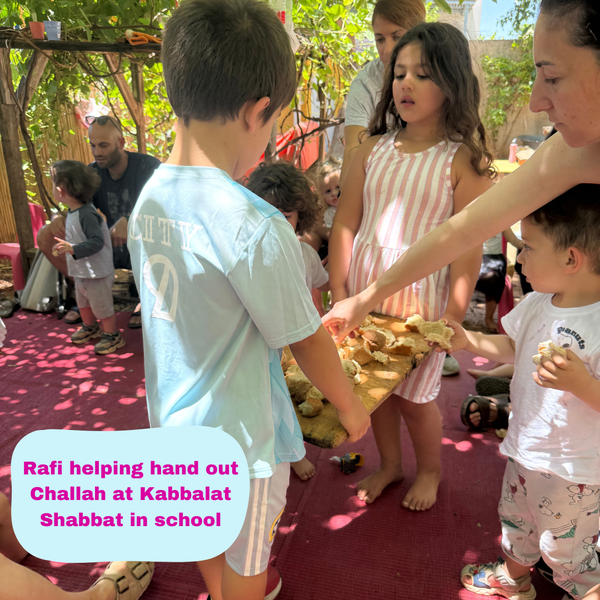 All the parents come to the ceremony to eat, talk, and spend time with the kids in school. Afterwards, Rafi and I join the masses in doing our food shopping. Everyone is running around getting errands done. There is an air of something special as people rush to get everything done before the stores all close early, as they do every Friday – and remain closed until Sunday. Then, we drive all of 5 minutes and stop at my dad’s apartment. He spends Friday mornings cooking for his kids and grandkids for Shabbat. He likes to complain about it, all the while loving it. He makes comments about how everyone just comes to eat but he wouldn’t have it any other way. 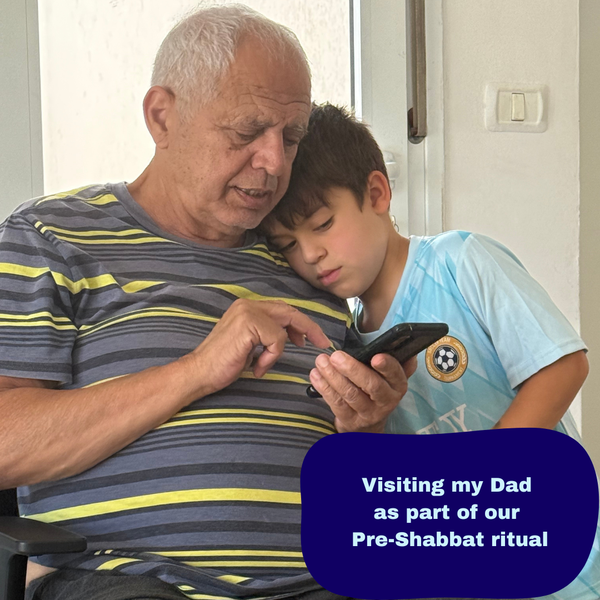 Both my brother and I stop over there with our kids on Fridays to visit, eat, and take leftovers home. Then, all of a sudden, the town goes quiet. Everyone is in their home cooking, cleaning, and putting the finishing touches to their week before bringing in the day of rest. As the sun sets, families put away their phones, walk to synagogue, sit down for a meal, and exhale in a way that doesn’t happen during the week. Rafi and I always review our week at Shabbat dinner. We each name the best part of our week and the hardest part of our week. This has really allowed me to get to know him on a different level. Judaism and the psychology of happiness have always been good friends. Shabbat teaches us to treat ourselves. To work hard and rest hard. To spend quality time with family every single week no matter what. To be nice to ourselves and to hold our lives to a higher standard. We love Shabbat.  Love, Elana |
Podcast also available on PocketCasts, SoundCloud, Spotify, Google Podcasts, Apple Podcasts, and RSS.
 Elana's Aliyah Blog
Leave a comment